Fieldwork#
Seagoing observations are the foundation of my work. I’ve spent more than 180 days at sea, much of it on GO-SHIP, the international program that repeats full-depth hydrographic sections across every ocean basin about once a decade to track long-term changes in ocean heat, carbon, oxygen, and nutrients.
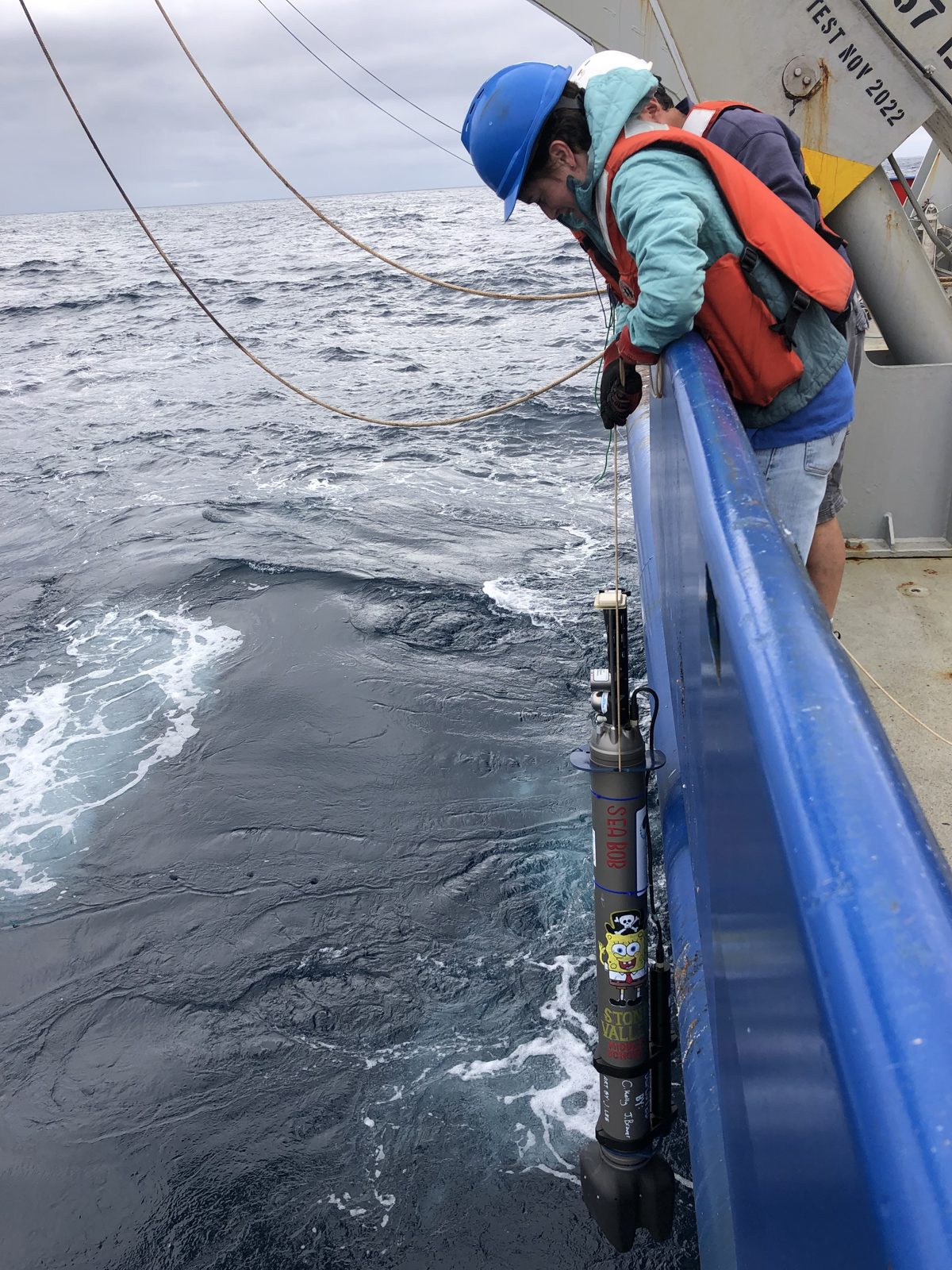
Fig. 1 Deploying a profiling float over the side. Floats like this keep collecting data long after the ship has left.#
A16S (2026): South Atlantic#
R/V Roger Revelle · Punta Arenas, Chile → Cabo Verde · March–May 2026
The 2026 A16S expedition crossed the South Atlantic from the tip of South America to Cabo Verde during 53 days at sea. The team occupied 96 full-depth CTD-rosette stations, sampled the ocean from the surface to as deep as 6,000 m, collected more than 20,000 seawater samples, and deployed 34 Argo floats. This was the fourth GO-SHIP occupation of the A16 line since the 1990s. Together with the A16N section completed in 2023, it gives a complete cross-section of the Atlantic Ocean. I sailed on A16S as Co-Chief Scientist.
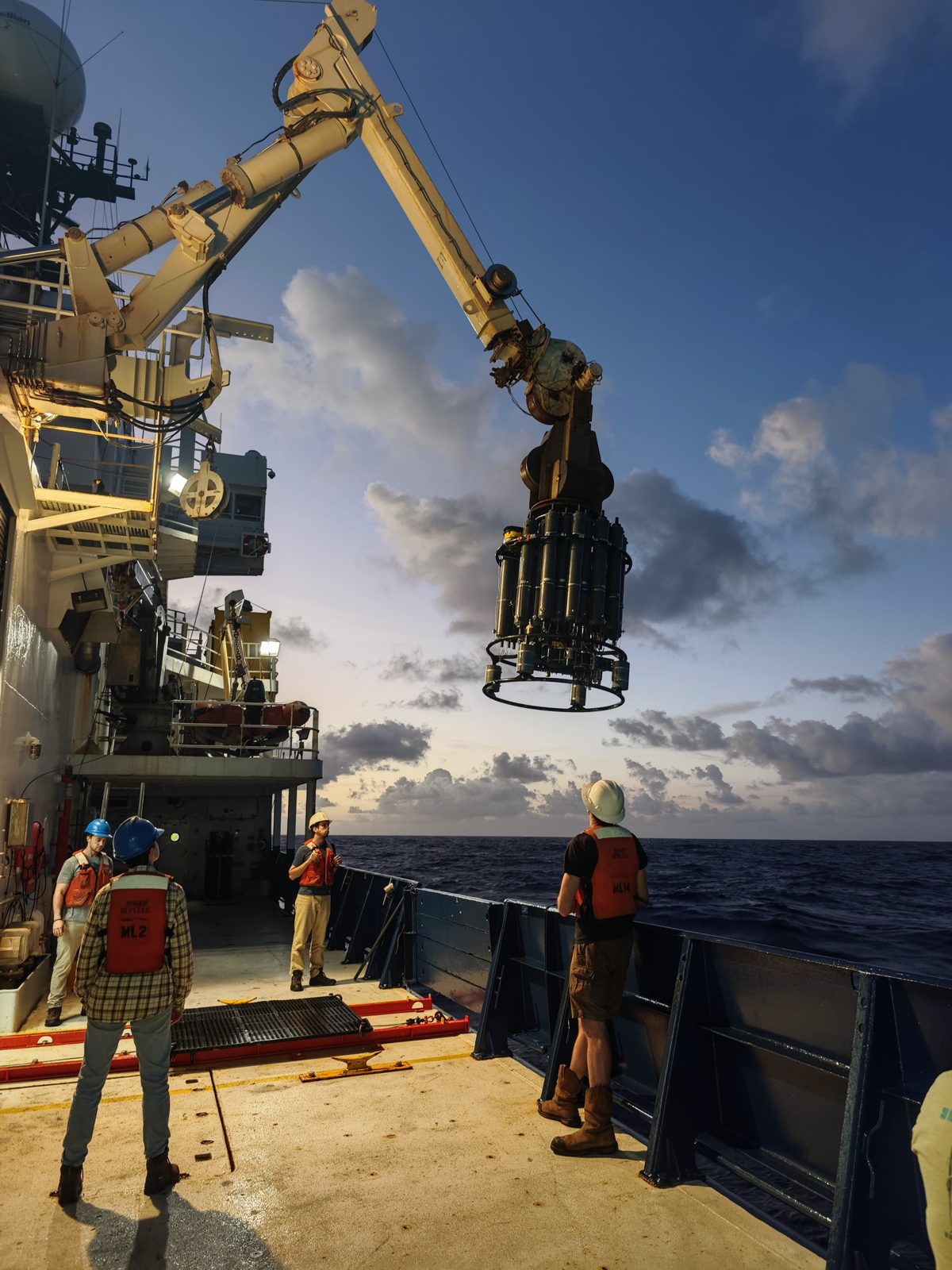
Fig. 2 The CTD rosette swings over the deck of R/V Roger Revelle at dusk during A16S.#
P16C (upcoming, 2027): Central Pacific#
R/V Thomas G. Thompson · Pape’ete, Tahiti → Honolulu, Hawai’i · March 10 – April 14, 2027
Next up, I’ll lead the GO-SHIP P16C section as Chief Scientist. The cruise runs north through the central Pacific from Tahiti to Hawai’i.